
EV charging systems for highway corridors and heavy-duty vehicle operations.
Trucks stop briefly before continuing long routes, and that short window shapes how charging can be planned across the site.
Traffic flow and available power then set the limits, so system design begins with vehicle movement rather than equipment specifications.
Highway truck charging fits sites where vehicles stop for short breaks and quickly rejoin long-distance routes, which makes rapid vehicle turnover the core operating condition.
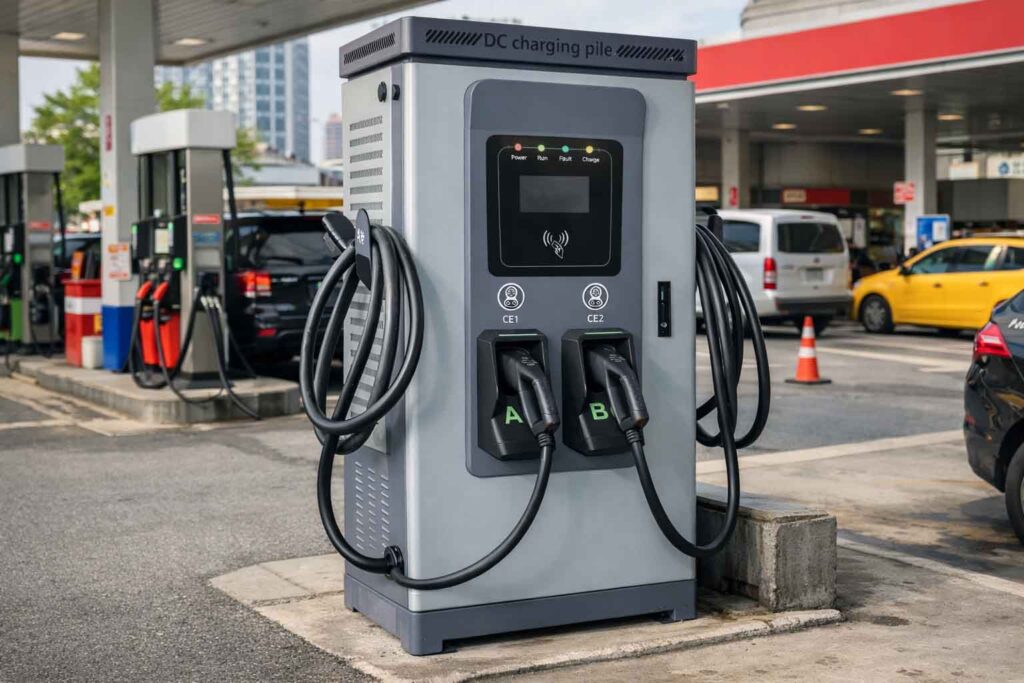
01.
Trucks stop for a limited time before continuing their routes.
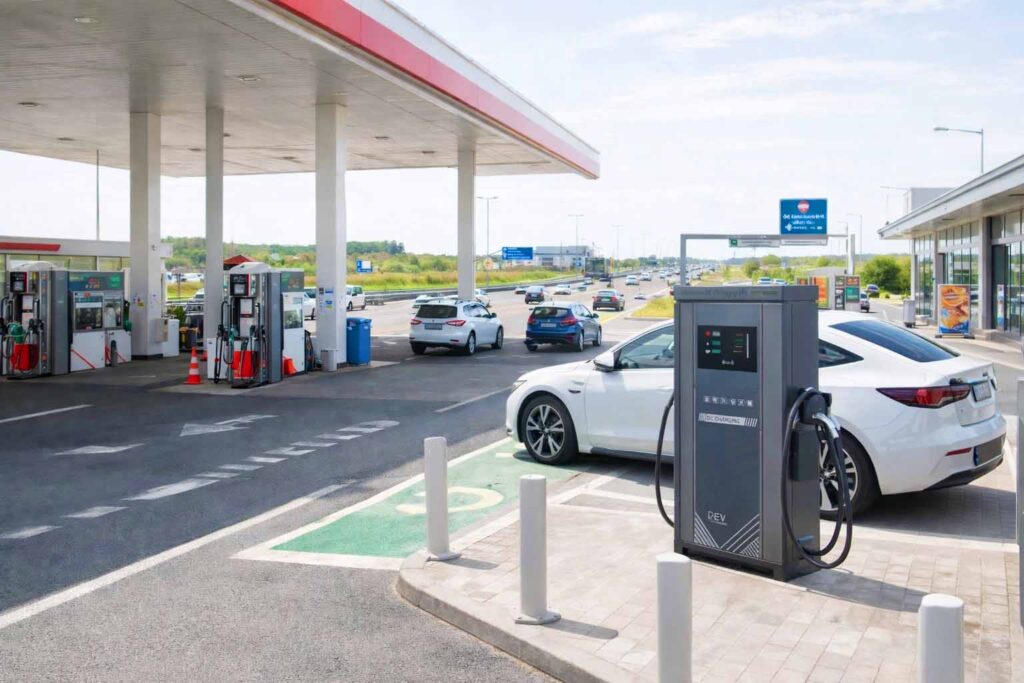
02.
Commercial fleets refuel and charge along major freight corridors.
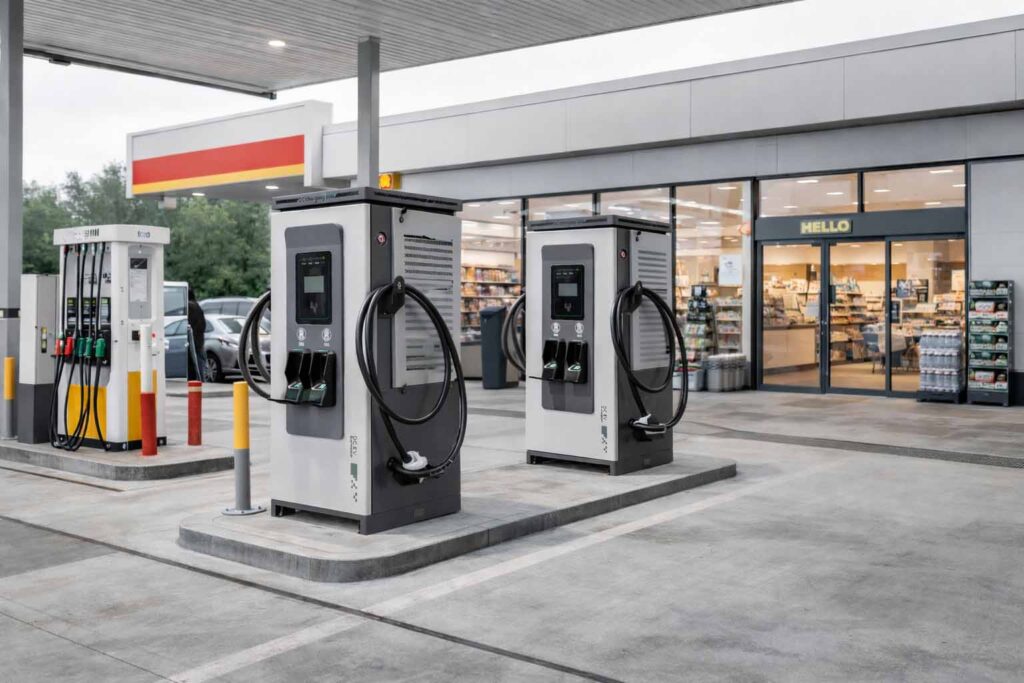
03.
Vehicles cycle through cross-docking operations.
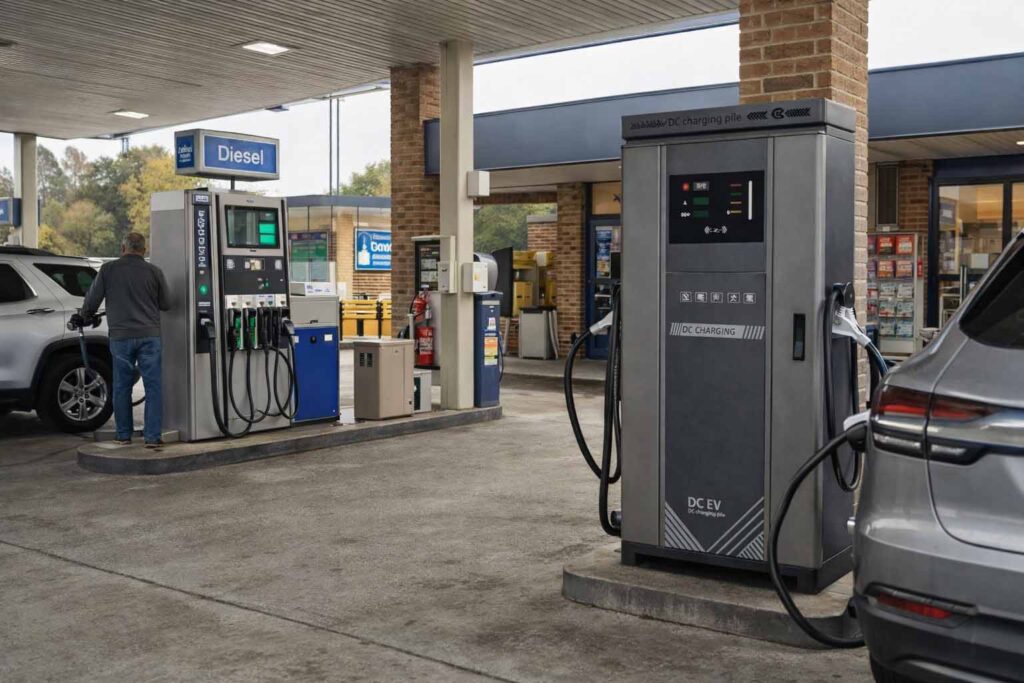
04.
Heavy-duty transport moves between terminals and warehouses.
05.
Traffic flows continuously through controlled checkpoints.
Highway charging for trucks and buses depends on stop duration, vehicle flow, and site power capacity.
Operational conditions define the system far more than the equipment does.
Trucks often leave before charging is complete.
Each heavy vehicle draws a large amount of energy.
The existing connection may not handle the load.
Vehicle queues change how trucks move through the site.
Available capacity depends on the local power provider.
System planning begins with how trucks move through the site and how long they stop.
Power availability only determines how that demand can be shared. → Technical system guides
Vehicle entry and exit control how the site operates.
Charging output is adjusted to fit the available power.
Charger locations follow traffic paths and safety spacing.
System performance and energy use are checked from one platform.
The chargers deliver energy to each truck, but the system control decides how that energy is split across all vehicles on site.
Charging order and power limits are set based on stop time, traffic volume, and available site power.
Charging equipment
DC chargers are chosen based on stop duration and vehicle flow.
Power control layer
Output is adjusted to fit the site’s available power.
Monitoring tools
Charging sessions and energy use are viewed from one system.
Vehicle identification
Each session is linked to a specific truck or fleet.
Highway sites may look different but their operating setups repeat from project to project.
Stop time, vehicle volume, and available power are what drive those models.
Vehicles stop briefly between routes and need rapid session turnover.
Charging is scheduled around fixed timetables and route cycles.
Sites serve mixed traffic along major transport corridors.
Highway charging is planned around how trucks enter, queue, and leave the site, as well as how much time they have to stop.
Equipment choices only come after those operating conditions are understood.
Applied to locations serving large trucks with high energy demand.
Every highway truck site operates under different traffic and power constraints.
A short discussion helps confirm whether a charging system fits your routes and stop conditions.

EV charger manufacturer for project based commercial AC & DC charging systems
© [2025] · All Rights Reserved · EV Charging Equipments