
EV charging systems for parking facilities and garages with changing vehicle flow.
Cars arrive and leave at different times throughout the day.
Some stay for minutes, others for hours.
That turnover controls how charging can be shared across the site.
Power only limits what is possible after the parking behavior is understood.
Parking charging is used where vehicles stop for short, medium, or long periods.
The length of stay defines how the system can operate.
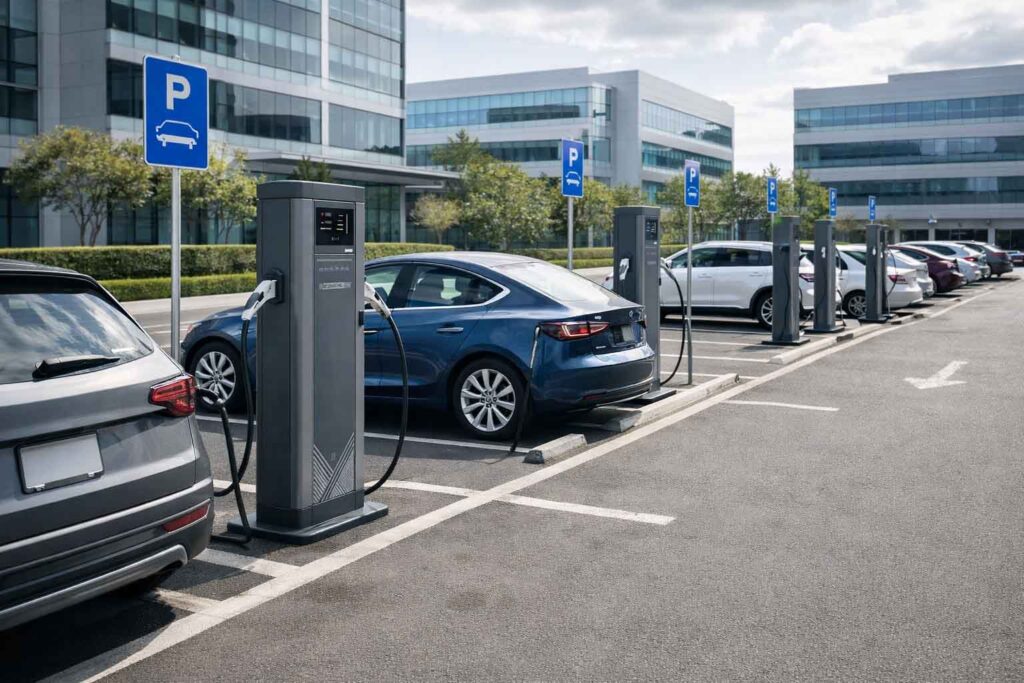
01.
Access is controlled, but parking duration varies by tenant.
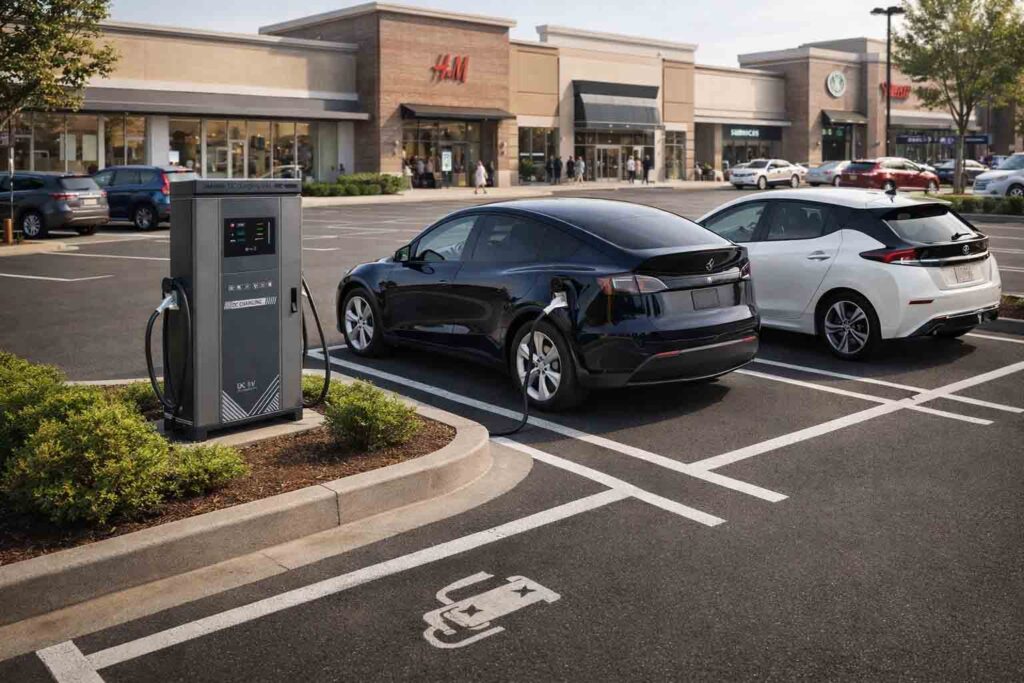
02.
High vehicle turnover means charging windows are short.
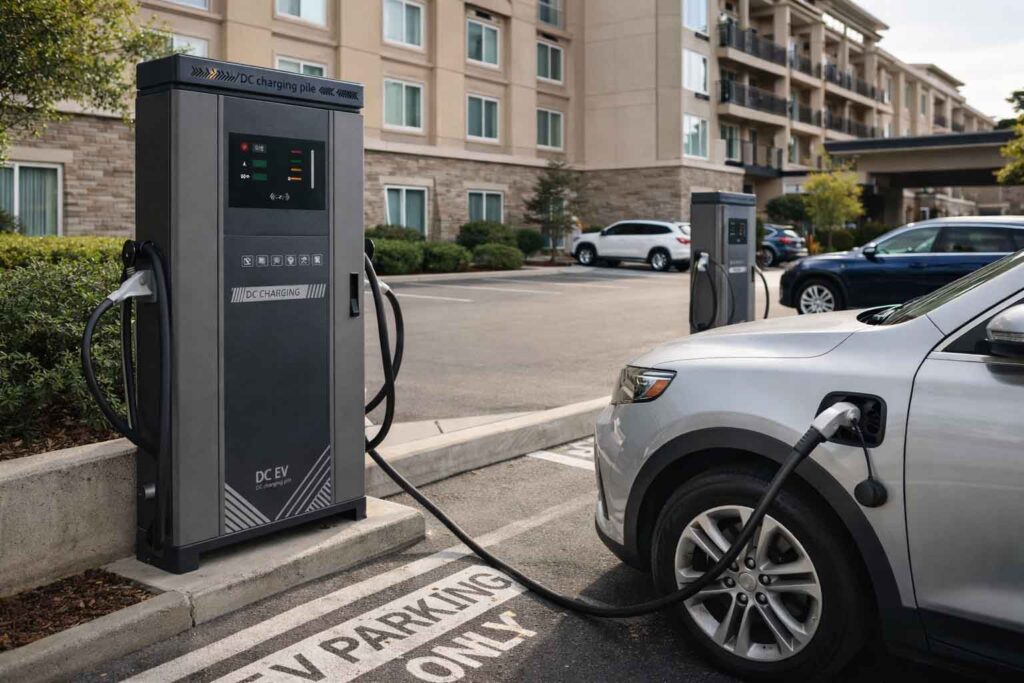
03.
Parking duration changes throughout the day.
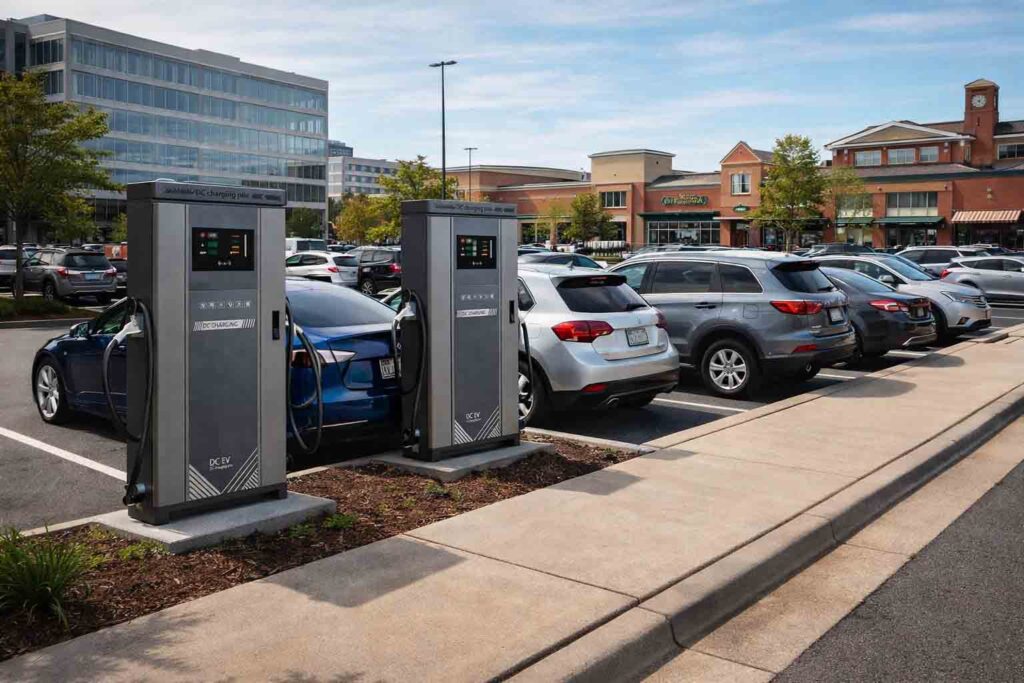
04.
Different user groups have overlapping parking behavior.
05.
Vehicles arrive in clusters and leave around the same time.
Vehicles arrive and leave at different times across the day.
The site’s available power then decides how charging can be managed.
Many vehicles leave before charging can complete.
Charging requests often rise together.
Existing infrastructure may not support added load.
Different drivers rely on the same equipment.
Charging has to follow access and traffic rules.
Cars move through parking facilities in predictable cycles.
Power availability only decides how much of that demand can be served. → Technical system guides
Vehicle stay time determines how charging sessions are scheduled.
Power is divided across chargers to match site capacity.
Drivers and vehicles are identified through local or digital systems.
Energy use is recorded to keep charging within site limits.
Charging in parking facilities depends on both field equipment and a central control layer.
The control system decides how power is shared and when vehicles can charge.
Charging units
AC and DC chargers are selected based on parking time and vehicle turnover.
Load management
Charging output is adjusted to match available site power.
Monitoring system
Charging activity and energy use are tracked in one platform.
User access and records
Drivers are identified and session data is stored.
Parking sites follow regular arrival and departure cycles throughout the day.
These repeated cycles point to a small set of system layouts used across most projects.
Vehicles remain for brief periods, so charging is rotated frequently.
Cars stay long enough for partial charging within shared sessions.
Vehicles remain for extended periods and can complete charging cycles.
Parking charging systems are selected based on how the site operates, not by charger ratings.
Once the operating model is clear, the power category can be matched.
Best suit for facilities where cars parked for extended hours.
Often used when vehicles pass through in shorter cycles.
Support both long-duration parking and frequent vehicle turnover.
Parking facilities operate under different traffic and power constraints.
A short discussion helps determine whether a charging system fits your site and operating model.

EV charger manufacturer for project based commercial AC & DC charging systems
© [2025] · All Rights Reserved · EV Charging Equipments