
EV charging systems designed for offices, factories, and business campuses.
Employees and company vehicles usually park for several hours during the workday. These parking patterns set the limits for how charging can be shared across the site.
The building’s electrical capacity and daily load profile shape the system layout. Most workplace projects start with vehicle movement, not with charger power.
Workplace charging is suitable for sites where vehicles are parked for extended periods during business hours.
Charging windows are defined by how long cars stay, not by how fast energy can be delivered.
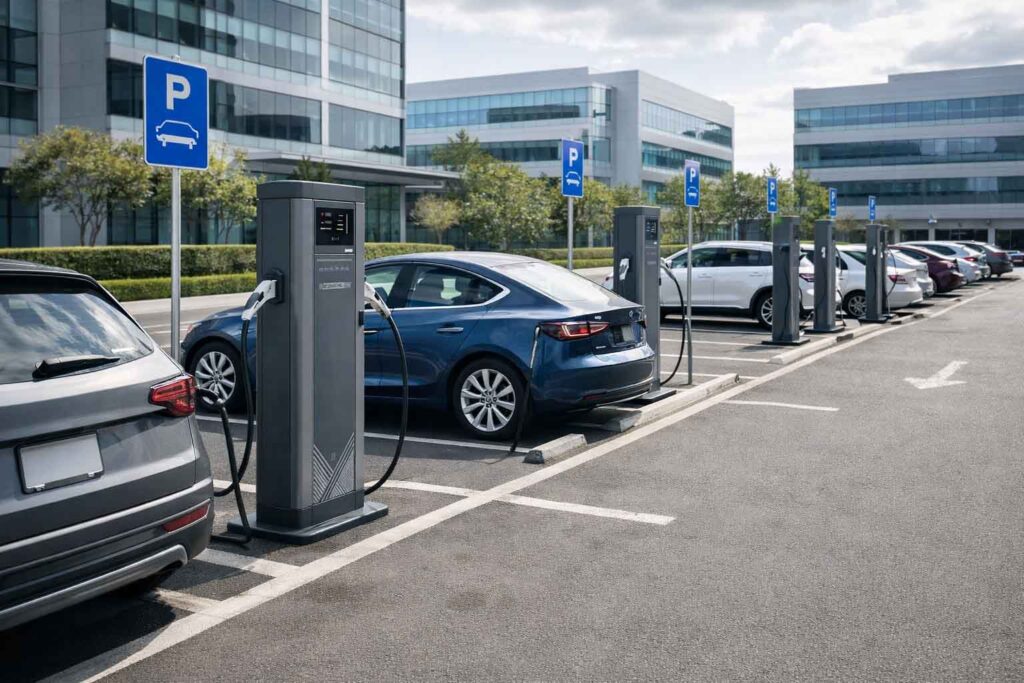
01.
Employees park most of the day which allows shared charging.
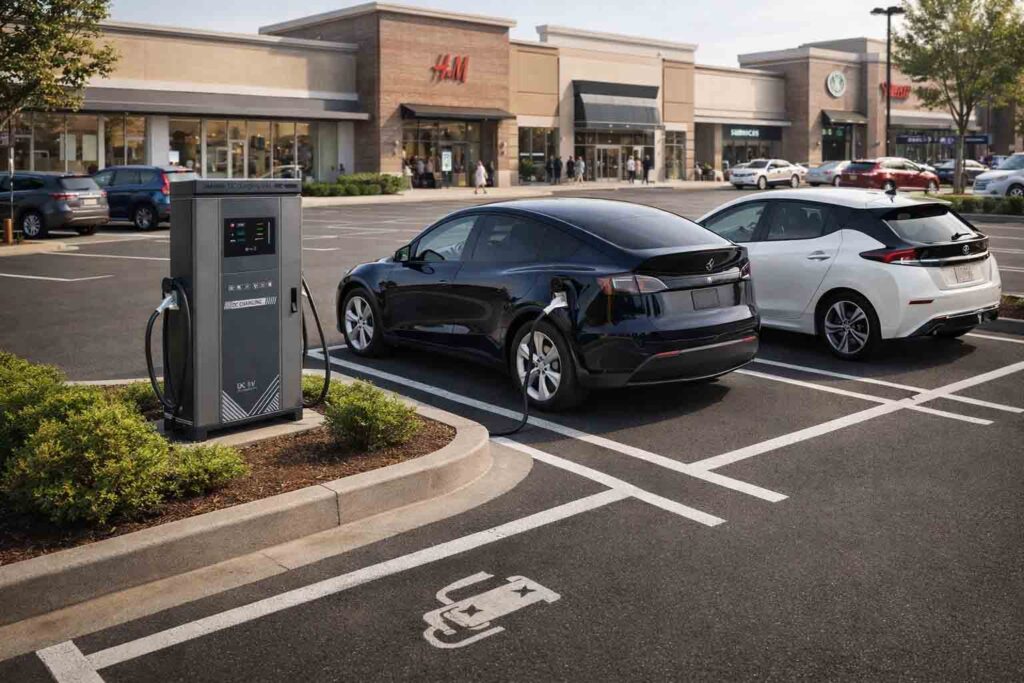
02.
Parking is mixed with both long-stay and moving vehicles.
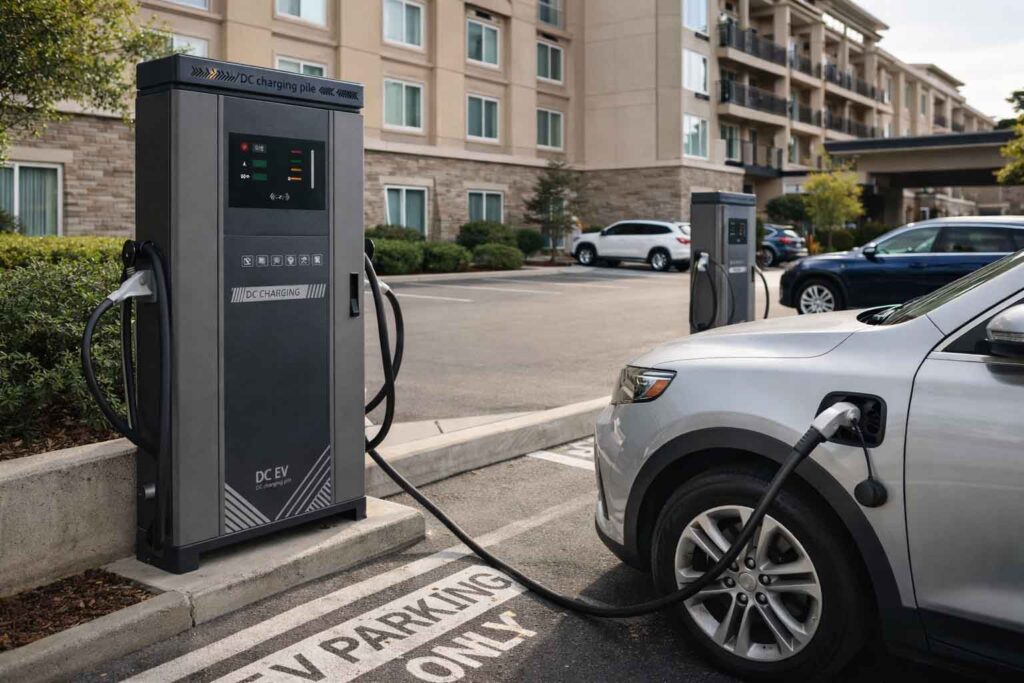
03.
Multiple tenants share parking and site power.
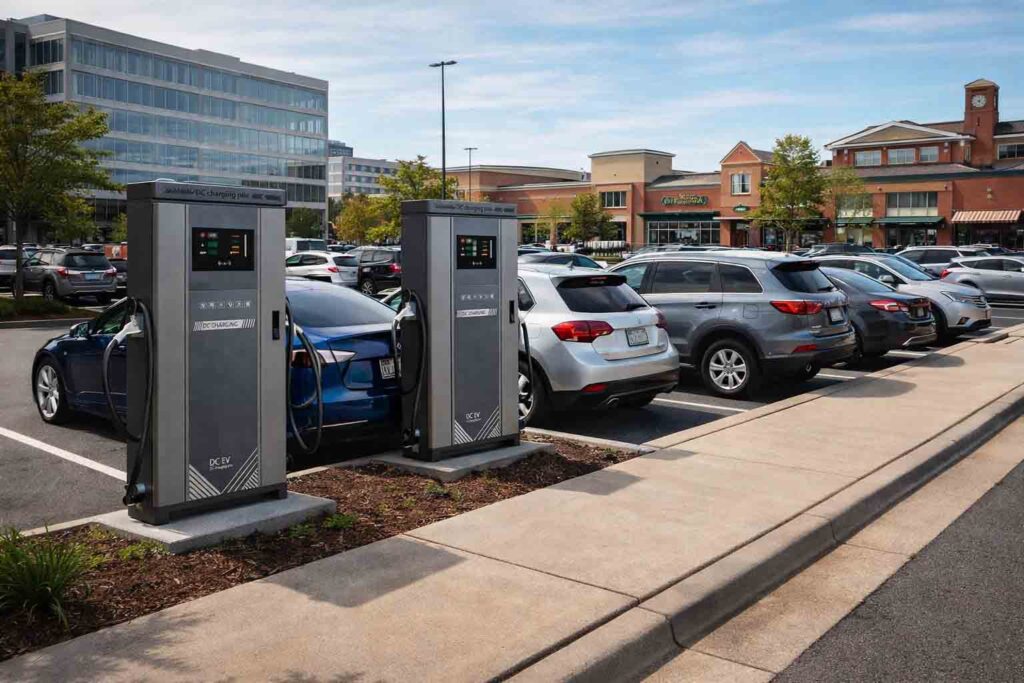
04.
Charging demand follows vehicle dispatch cycles.
05.
Shift schedules shorten the available charging window.
Workplace charging is limited by how the site operates and how much power the building can supply.
Most constraints come from daily usage patterns, not from the charging equipment itself.
Most sites cannot add chargers without checking transformer and panel capacity.
Charging often runs while offices and equipment are already drawing power.
More vehicles arrive than can charge at the same time.
Charging has to align with access rules and site operations.
Later expansion depends on what the existing infrastructure can handle.
Vehicle movement sets the starting point for every workplace charging layout.
Site power only decides how that demand can be shared across the network. → Technical system guides
How long vehicles stay determines whether charging is shared or assigned.
Power is distributed across chargers based on real-time site capacity.
Users and vehicles are managed through cards, apps, or internal systems.
Site energy use is tracked to keep charging within building limits.
Charging at work is not just about the units on the ground.
A central control layer decides how power is shared and when vehicles can draw energy.
Charging stations
AC and DC units are used based on parking behavior and site layout.
Load management
Charging power is adjusted to stay within building limits.
Monitoring platform
Charging activity and site load are tracked in one system.
User access and reporting
Employees and vehicles are identified, and usage data is recorded.
Every site behaves differently, but the operating models repeat.
They are driven by how long cars stay, who uses them, and how much power is available.
Most vehicles stay on site for the full workday, so charging is rotated across parked cars.
The same chargers are used by company vehicles and staff cars at different times.
Charging time is tied to shift changes and frequent vehicle movement.
Workplace charging systems are selected by how the site operates, not by charger ratings.
Once the operating model is clear, the power category can be matched.
For sites with shorter parking windows or mixed vehicle use.
For sites that serve both long-stay and rotating vehicles.
Every workplace site operates under different electrical and parking constraints.
A short discussion helps clarify whether a charging system fits your location and operating model.

EV charger manufacturer for project based commercial AC & DC charging systems
© [2025] · All Rights Reserved · EV Charging Equipments