
DC charging systems for commercial and infrastructure sites with high vehicle turnover.
These DC systems are used where vehicles stop briefly and need to recharge before returning to service.
Stop time and site power set the limits for how energy is delivered across the network.
Fleet depots, highway corridors, and high-traffic commercial sites rely on this operating model.
System planning begins with vehicle flow, not with equipment ratings.
Most commercial DC charging projects operate between 30kW and 360kW+. In project deployments, the usable power level is usually set by site conditions rather than the charger itself.
Smaller sites often start at lower power to avoid major grid upgrades, while high-traffic locations move toward higher output to manage vehicle turnover.
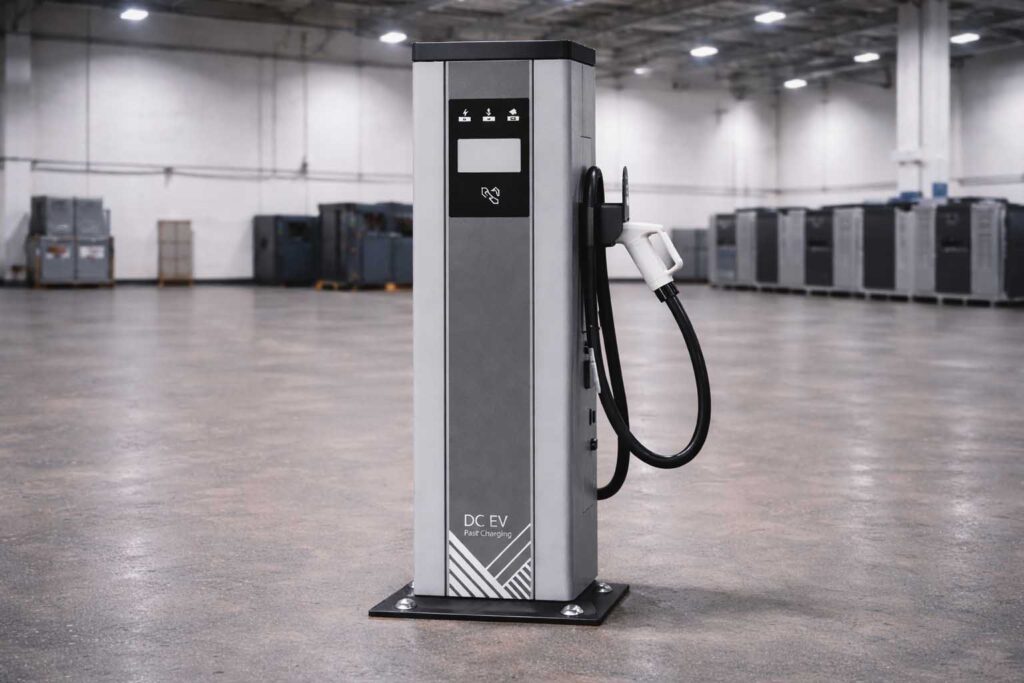
Small commercial sites usually start from 20kW to 30kW, where DC charging is required but available site power is still limited.
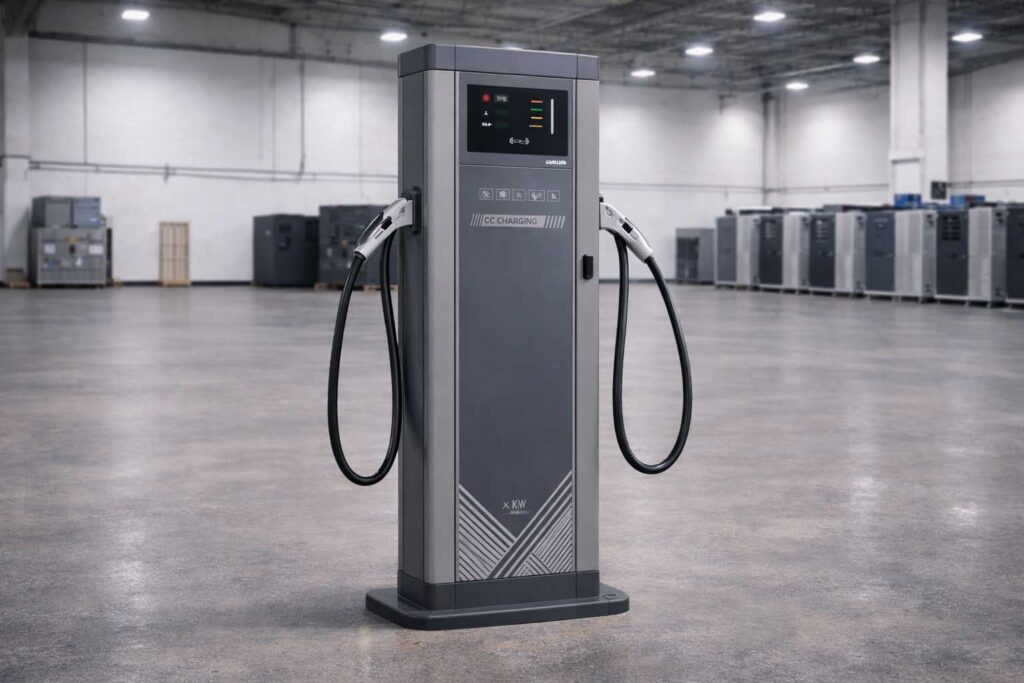
A common configuration for light commercial and shared public sites, typically operating between 40kW and 80kW.
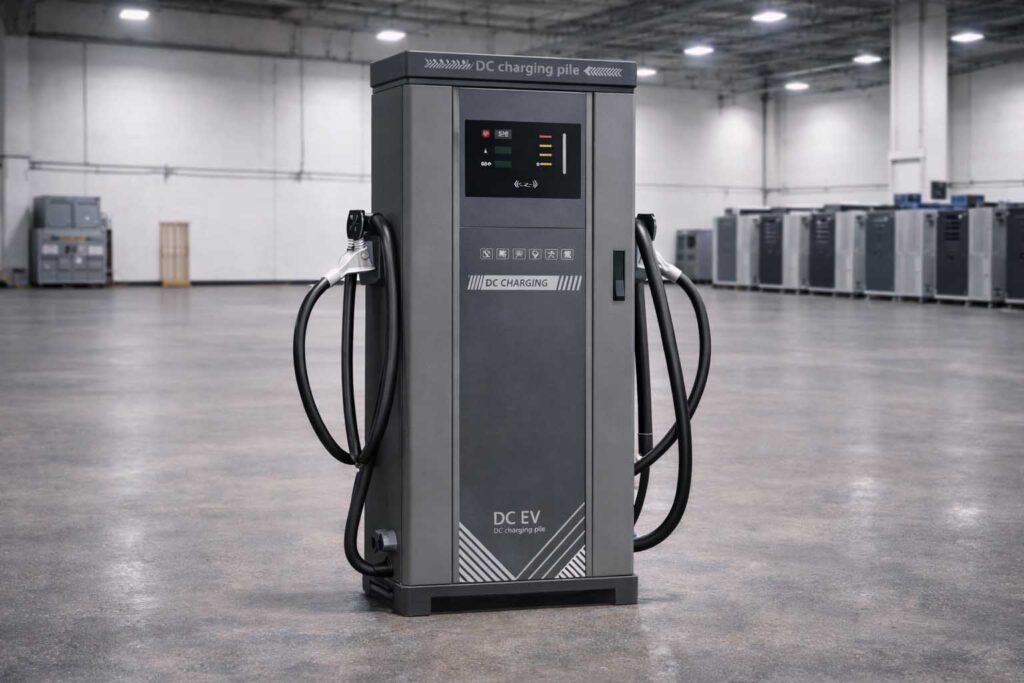
Used when vehicle turnover affects daily operation, with systems commonly deployed in the 120kW to 180kW range.
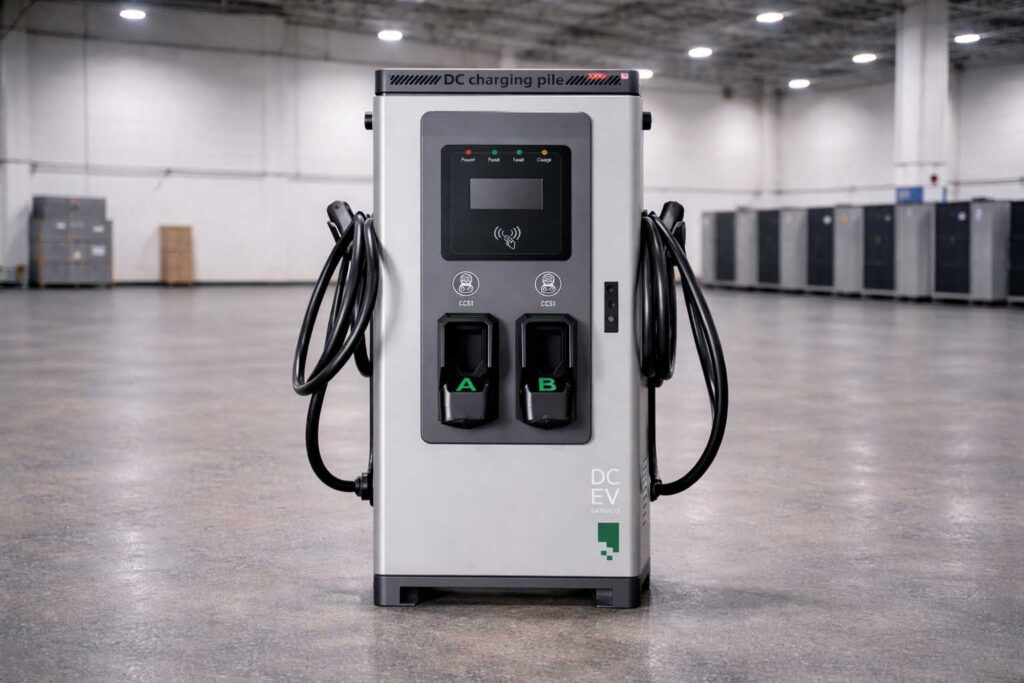
For high-traffic locations where stop time directly affects site throughput, usually requiring 240kW to 280kW output.
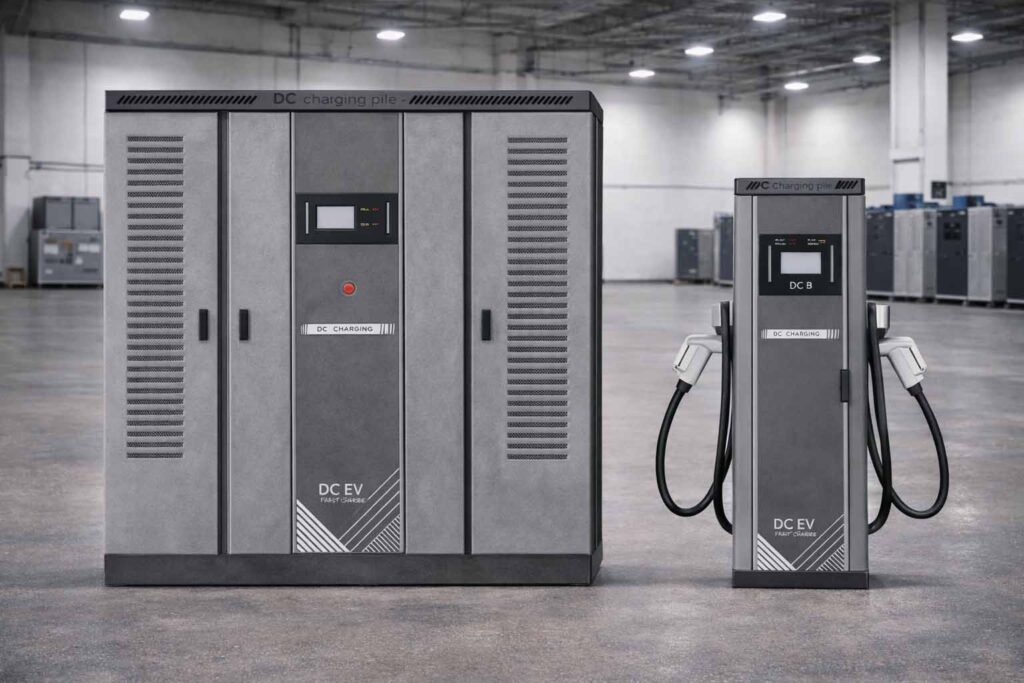
Highway and transit infrastructure where power demand goes beyond 360kW, and grid planning becomes part of site design.
Charging systems are built to serve very different needs, from long-stay parking to high-turnover operations.
Each application environment changes how the system is designed and how it runs day to day.
Power modules can be combined to match site demand.
Output adjusts across multiple chargers based on available site power.
Connects with standard monitoring platforms.
Air or liquid cooling supports continuous operation.
System status and faults can be checked off-site.
Standalone and modular layouts are commonly used on DC charging sites.
Integration focuses on site power limits, network connection, and ongoing system monitoring.
→ Technical system guides
Different DC power levels change how charging fits into a site’s daily vehicle flow.
Looking at them together helps clarify which operating pattern matches your project.
| Power | Charging Behavior | Link |
|---|---|---|
| 20–30kW | Low turnover | → DC 20–30kW |
| 40–80kW | Mixed use | → DC 40–80kW |
| 120–180kW | Fleet / corridor | → DC 120–180kW |
| 240–280kW | Short stop windows | → DC 240–280kW |
| 360+kW | Heavy-duty routes | → DC 360+ |
Every site runs under different traffic flow and power constraints.
A short discussion helps confirm which DC charging system fits your operation.

EV charger manufacturer for project based commercial AC & DC charging systems
© [2025] · All Rights Reserved · EV Charging Equipments